
Regent vs Regency Gold Mirror TV Frames: What’s the Difference?
September 16, 2025
How to Incorporate a Mirror TV for Georgian Décor
Integrating technology into a refined interior scheme is often a balancing act. Screens, by their nature, tend to dominate a space visually, which can disrupt the overall aesthetic—particularly in heritage settings or highly decorative rooms.
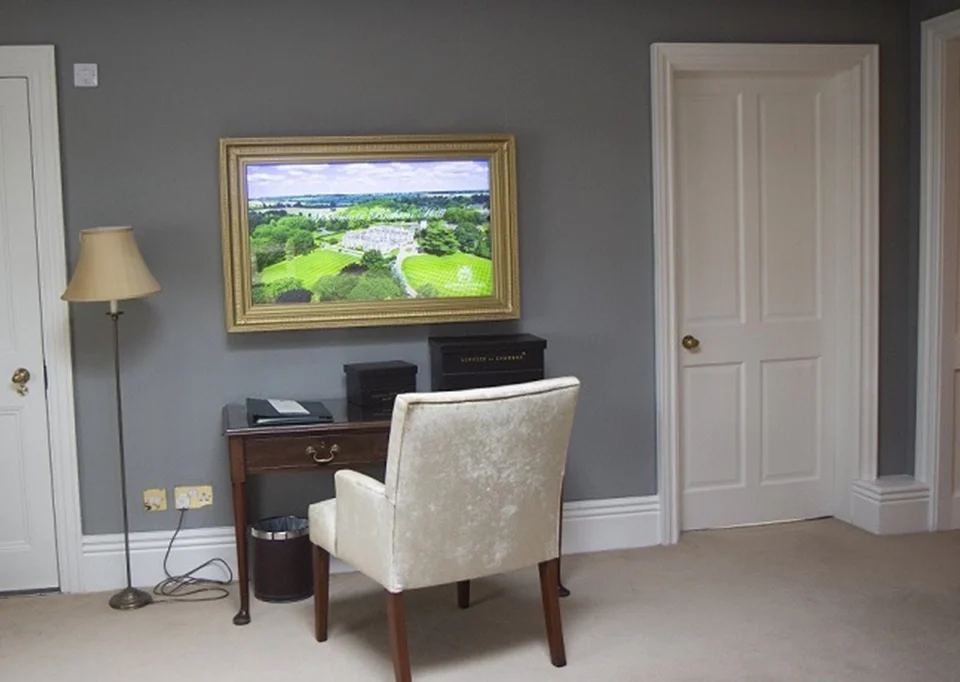
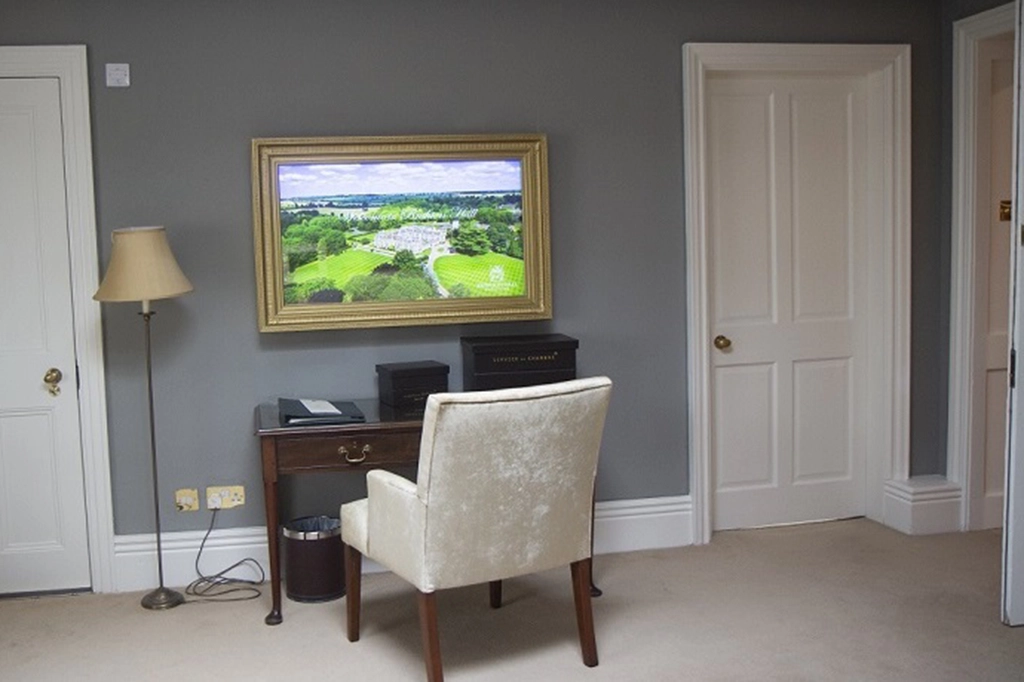
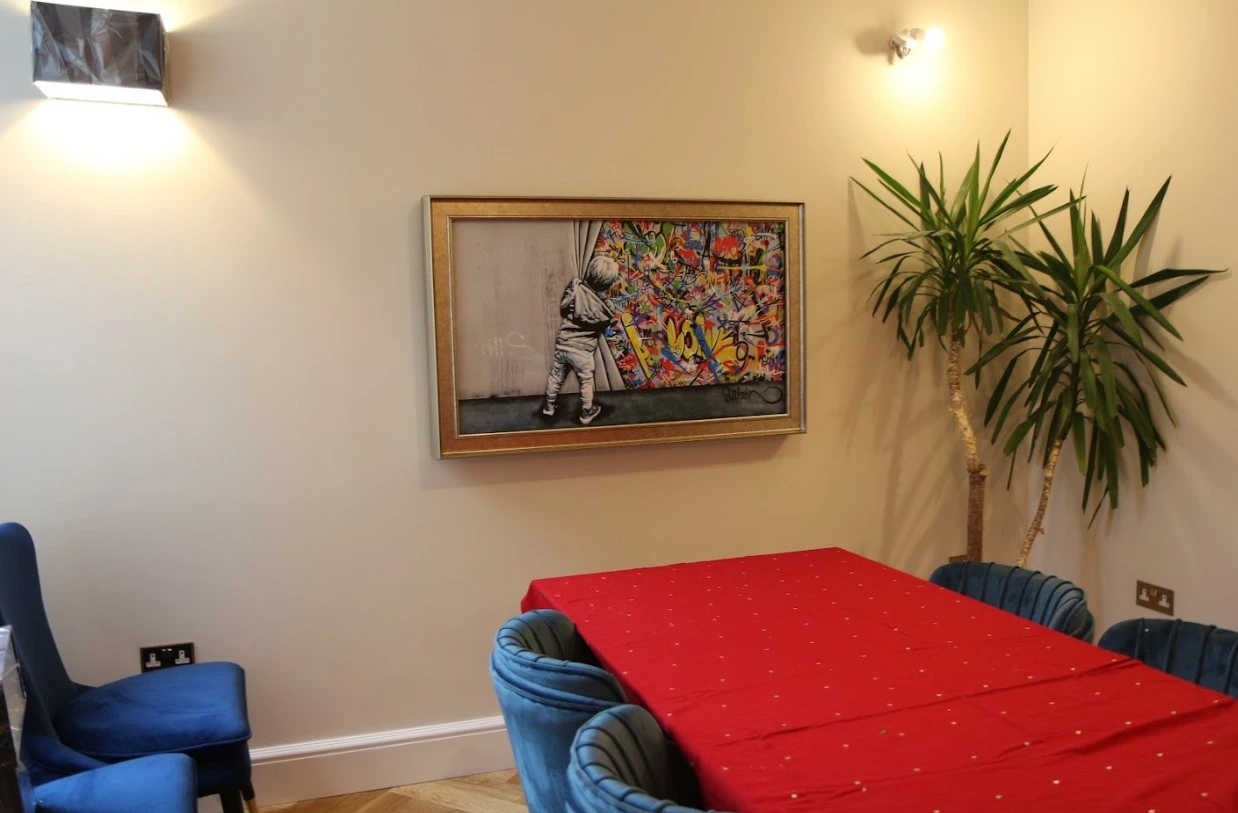
This installation of our Barbican Gold Mirror TV for Georgian décor home offers a clear example of how to resolve that tension in a considered and design-led way.
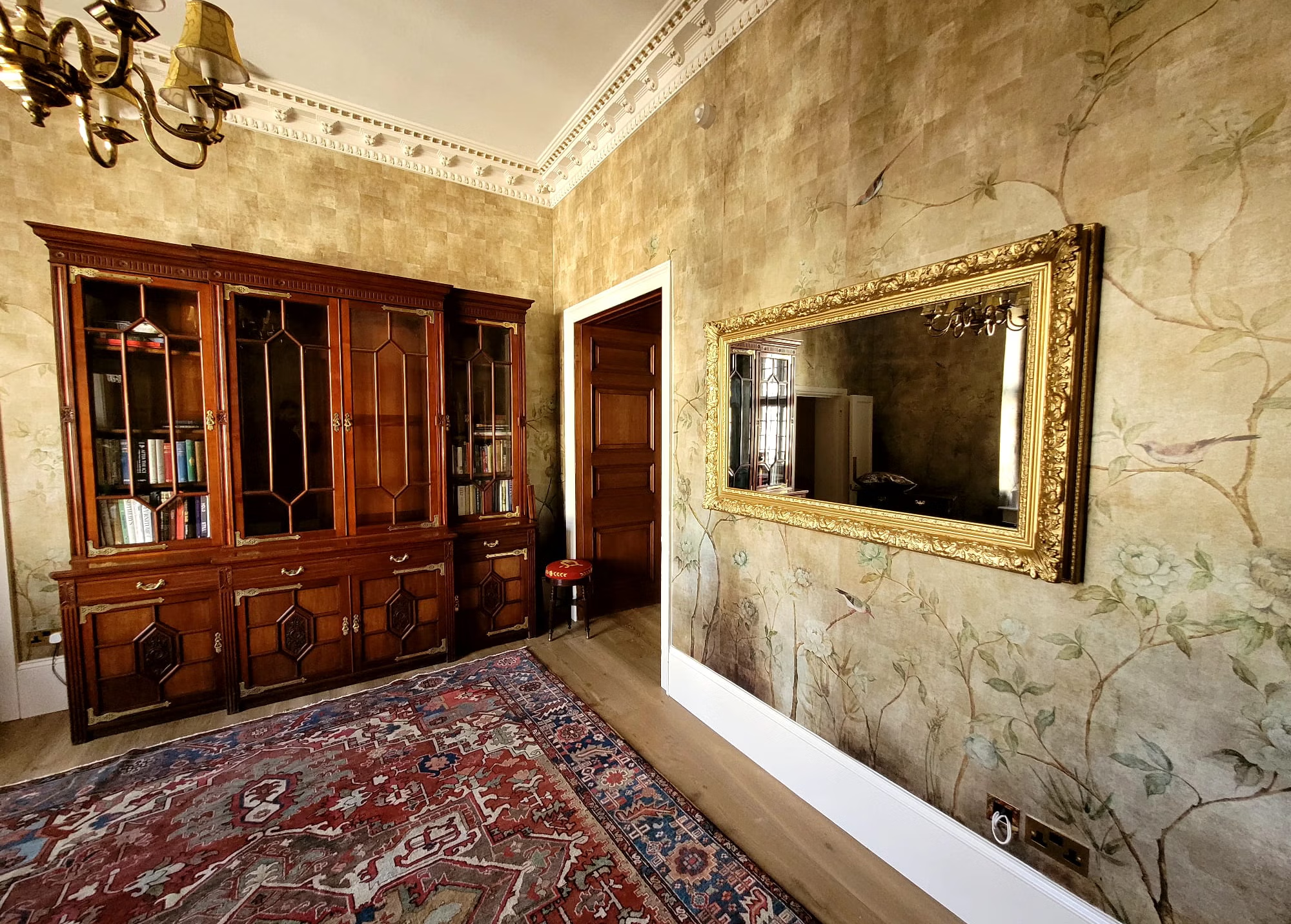
The brief was simple in principle but nuanced in execution: introduce a television into a room rich with architectural detail, layered finishes, and traditional character, without allowing the technology to detract from the interior scheme.
The solution was to conceal a 55-inch Samsung 4K display behind High-Reflective Dielectric Mirror TV glass, transforming the screen into a mirror when not in use.
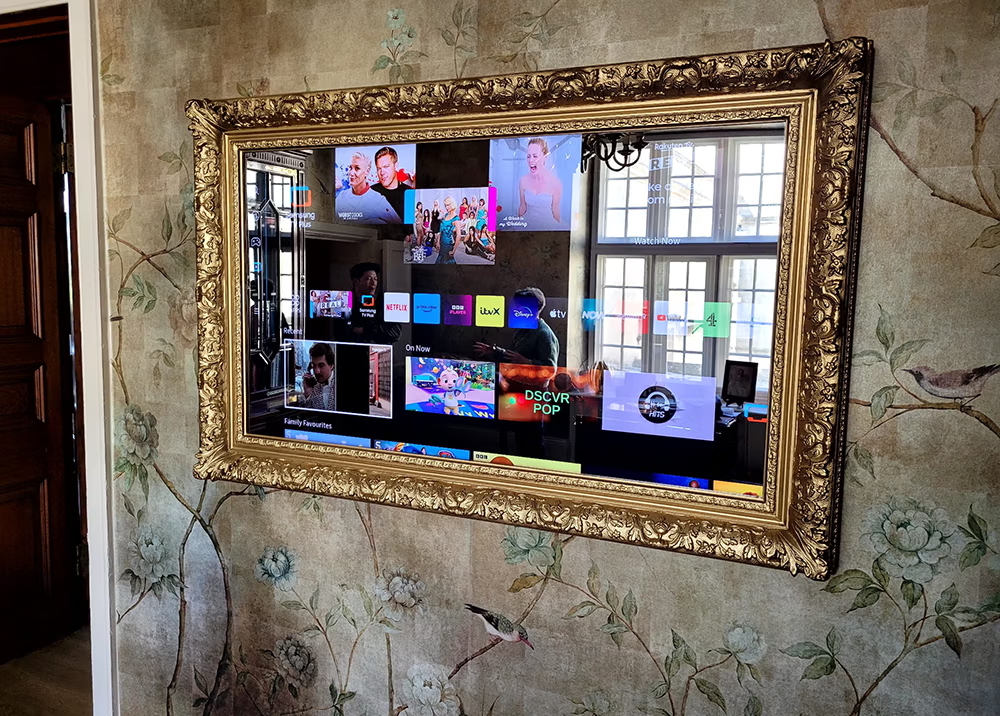
When approaching a project of this nature, the first consideration is always placement. In more contemporary spaces, TVs are often treated as focal points, but in traditional interiors—particularly those with decorative wall treatments, joinery, or period features—the aim is usually the opposite.
The screen should recede into the scheme.
Positioning the Mirror TV within a natural visual axis, such as between architectural elements or aligned with furniture layouts, allows it to feel intentional without becoming dominant.
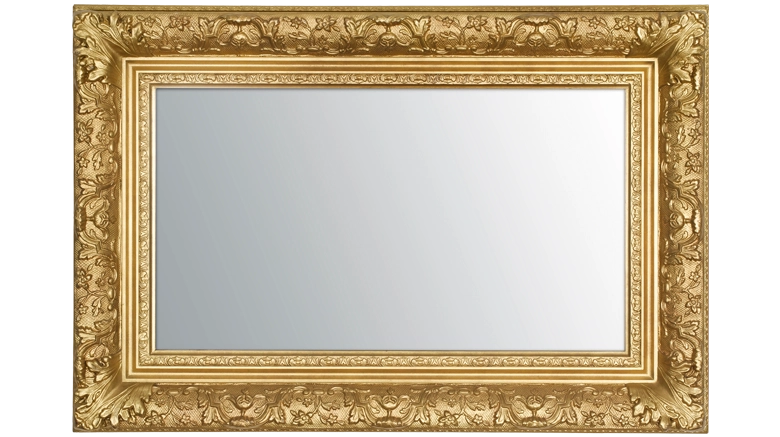
Barbican Gold Mirror TV Frame
Frame selection is equally critical. In this project, the Museum Quality Ornate Barbican profile was specified in a gold finish to sit comfortably alongside the room’s palette and detailing.
Rather than appearing as an applied or modern addition, the frame echoes the language of traditional mirrors and artwork.
For interior designers and FF&E procurement teams, this is often where a project is won or lost—proportion, finish, and detailing must align precisely with the wider scheme.
A frame that is too minimal can feel out of place in a richly layered room, while one that is overly ornate without context can feel contrived.
Choosing the Right Dielectric Mirror TV Glass Type
Another key consideration is reflectivity. Not all Mirror TV solutions perform equally, and the specification of the glass has a direct impact on both the mirror effect and the viewing experience.
When pairing a standard TV with high-reflective dielectric Mirror TV glass, there is always a balance to be struck between reflection and screen visibility.
In spaces where there is significant natural light falling directly onto the TV, particularly where it cannot be controlled with blinds or shading, this becomes an important factor.
In these situations, we would typically recommend specifying a lower reflective dielectric Mirror TV glass in combination with one of our LuxView high brightness TVs.
This approach helps to maintain strong on-screen performance in challenging lighting conditions while still delivering a considered and elegant mirror effect.
Specification
From a specification standpoint, early coordination is essential. Mirror TVs often sit within broader joinery, wall finishes, or FF&E packages, so allowances for power, ventilation, and access should be considered at the design stage. In retrofit scenarios, careful planning ensures that the installation integrates cleanly without compromising surrounding finishes. In new schemes, there is an opportunity to design the Mirror TV as part of the architecture itself, further enhancing its seamlessness.
This project also highlights the importance of material dialogue within a space. The gold tones of the frame work in harmony with the warmth of the timber cabinetry and the softness of the wallcovering, creating a cohesive visual narrative.
For designers, thinking about the Mirror TV not as a piece of technology but as an object within the material palette can help guide specification decisions. It becomes part of the composition, rather than an interruption.
In hospitality settings, such as boutique hotels, private members’ clubs, or high-end serviced apartments, the same principles apply, often with additional layers of complexity.
Durability, consistency across multiple rooms, and ease of maintenance all come into play. Mirror TVs offer a solution that satisfies both aesthetic and operational requirements, allowing designers to maintain a refined visual language while meeting guest expectations for in-room technology.
How a Mirror TV Completes Your Interior Design Project
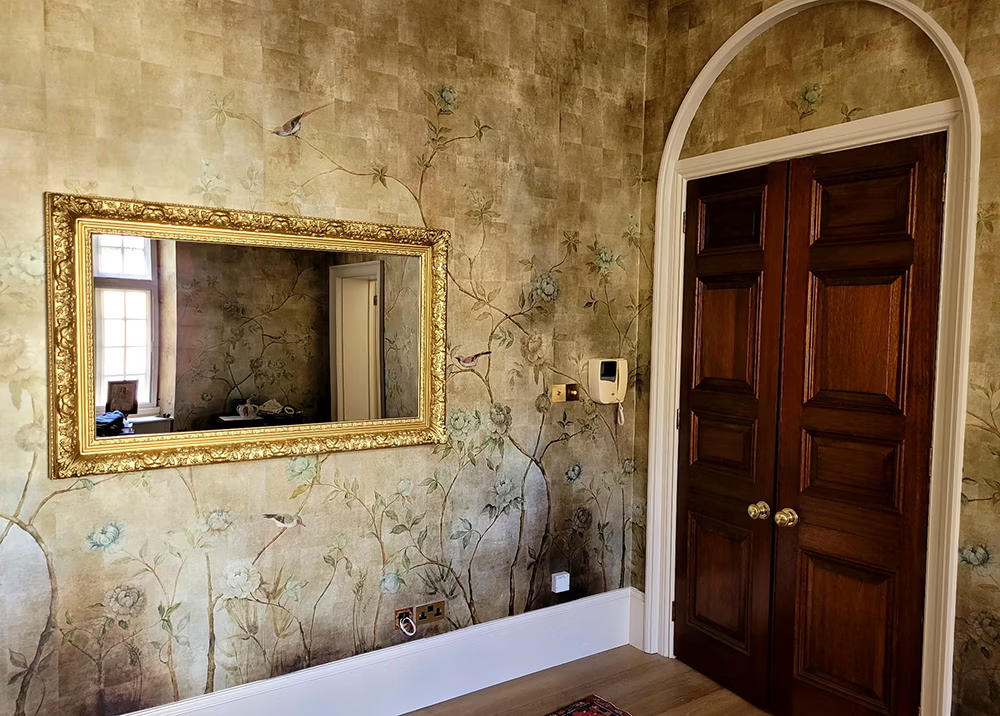
Although we did not see the final dressed scheme in this instance, the installed piece clearly demonstrates how a Mirror TV can complete a space without competing with it. The result is a room that retains its character and elegance, with technology present only when needed.
For designers and specifiers, the key takeaway is to approach Mirror TVs as part of the overall design narrative.
Consider placement, proportion, materiality, and performance from the outset. When specified thoughtfully, they offer a way to integrate modern functionality into even the most traditional interiors, without compromise.
See this Mirror TV Frame on our YouTube channel here: